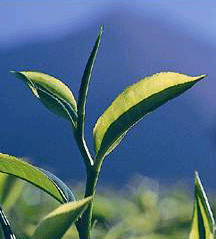
Archeologists unexpectedly discovered the world's oldest known tea leaves while working on a tomb belonging to an emperor of the Han Dynasty. The nearly 2,200-year-old tomb, discovered in the...
Evidence about health benefits of tea continues to pile up in 2012. The year is barely a couple of months old, yet it has already witnessed several studies and reviews confirming long-held...
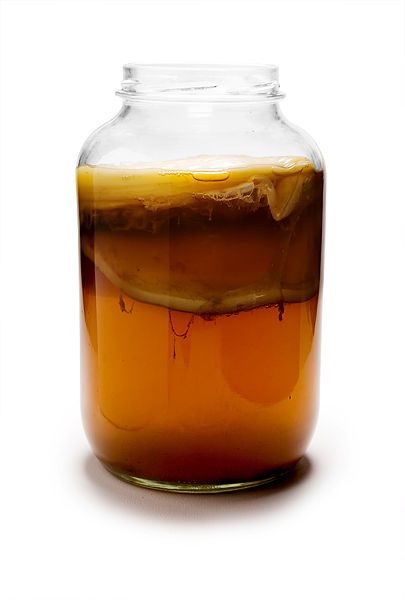
With reports of kombucha gaining a wider following among mass audience, it may be time to start wondering if the gourmet tea industry can learn a thing or two from the way its fermented cousin...
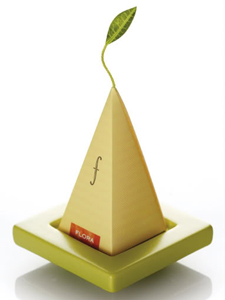
Sara Lee's purchase of Tea Forté may have gone somewhat unnoticed due to the background noise of New Year's festivities, yet it represents significant news for the gourmet tea industry...
The biannual SIAL expo in Paris is one of the biggest of its kind in Europe. This year, it featured a tea pavilion filled with many international companies looking to penetrate into the European market, as well as a few players with a home court advantage. There was a lot of interest generated by premium tea purveyors showcasing exciting brands and products. Find out some of the highlights of the show, what buyers were looking for and catch up on some of the trends that are making an impact in Europe!
Cynthia Fazekas, Adagio's US Sales Manager, shares her thoughts on retail and consumer trends for the holiday season and gives some tips to stay ahead of the game in the tea business.
The current year is drawing to a close with the crucial Christmas season upon us. What are some of the trends you have witnessed this year what impact will these may have for the trade in the future?
Emphasis seems to be on quality but affordable teas, and practically reigns supreme in tea wares. Tea shoppers are buying by price point and are seeking less exotics, more tried and true favorites preferable in smartly priced gift sets. They seem to want good looking items, not too expensive and certainly not frivolous.
Gourmet items that the gift receiver might not otherwise splurge on for themselves are trending. Plus the "good health" aspect of tea shows care and concern.
With the US being in the midst of a severe economic crisis this year, how has the broader economic environment affected the tea industry and, more specifically, the retailers that you deal with on a daily basis?
In the current economic environment, we are seeing that retailers are carrying less stock initially, preferring to order more frequently than to risk sitting on product should the season fall flat. We will likely see more "emergency" and last minute orders.
Also, we've seen promos starting earlier than in previous years, as retailers expect consumers to more carefully ration their holiday budgets and want to capture the potential sale as early as possible.
As shoppers opt for more affordable and pragmatic choices, what are some of the traditional products that tend to do well now and might there be any exotic items that may have been overlooked? And given the current context of "smart" shopping, what are some of practical tips you would give to retailers in terms of tea selection and presentation?
Comfort teas such as English and Irish Breakfast blends and dessert-like flavored teas do well, especially paired with modestly price tea gadgets or brew ware.
Smaller amounts of exotic teas could have more impact, especially novelties like hand tied blooming teas that can be sold "by-the-bloom." A small pack of a single estate high elevation variety is also an option, as something unique and intriguing is sure to attract connoisseur customer attention.
As you note, retailers are more carefully apportioning their stock levels. What are some of the pitfalls to avoid in this approach and how should one ideally manage the process?
Pitfalls to avoid are underestimating customer turnout and product needs. This could result in lost opportunities, as once the customer leaves because you did not have a product they wanted, the odds of them returning when the item is back in stock decrease dramatically.
More frequent orders of small shipment could lead to additional shipping/handling charges that eat a bit more of the bottom line. Overstock issues can easily be handled by January sales events. Plus tea still mostly is a cool weather beverage and sells well all winter!
Economic worries will continue impacting sales for some time and businesses are still adjusting to the current situation as we head into 2010. Which business models and practices may find it the most difficult to survive in this environment and which ones have the ability to counter the trend?
Those that emphasize value and service will likely survive and perhaps even excel. Businesses that have not learned to trim their excess or have taken on too much debt will likely fall victim to the economic trend.
The online platform has a bright future in my opinion. People feel increasingly comfortable shopping online and appreciate the convenience associated with ordering from home or office. Smart and relevant use of vast possibilities that the web offers remains a challenge for many businesses.
Looking at the broader tea industry in the years ahead, what will be the (new) market drivers that will lift the sector and expand its reach once the economic situation improves?
My belief is that market drivers will be those that place the emphasis on the customer, their needs and individuality, while still exposing a jaded consumer to the new, exciting and exotic - all while remaining practical!
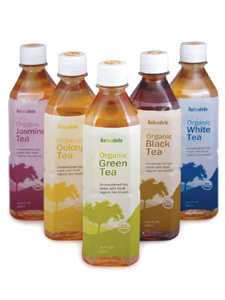
In terms of categories, it will be intriguing to see the RTD sector develop, as many multinational companies have taken a keen interest in it and are providing funding and distribution opportunities. It remains to be seen how convenience will shape product quality and taste.
Cynthia has an extensive experience in the US gourmet tea industry, consulting businesses large and small on all issues relating to tea for many years. She is currently managing Adagio's US sales. Her day always starts with a cup of Golden Yunnan tea.
A conversation about the Chinese tea market, the differences in consuming tea between China and the West, and the actions that the government is taking to boost the industry with Lydia Liu, renown tea buyer from China.
China has historically been a large producer and consumer of tea. How would you describe the state of the tea industry at the moment and has it yet felt the effects of the global economic slowdown?
China is indeed a large tea producer and consumer of tea. Chinese teas are famous in China and overseas. There are many Chinese people like to spend money on high quality traditional Chinese teas such as Ti Kuan Yin, Mao Feng, Long Jing, Jasmime tea and Pu Erh tea. Higher grade and early spring teas can be sold at a very expensive level which is double or treble that of a foreign price. Most Chinese people enjoy the pleasant taste of teas with beautiful tea sets. People also like to use nicely packaged teas as presents during festivals. So tea is very important for Chinese daily life. As a result, the production is large to meet the huge demand of tea drinkers that has been around for so many years.
At the moment due to the economic slowdown, Chinese market is quiet. There are less people that go out to eat and consume. So the tea market is difficult to maintian. Many people have scaled back on the quality of tea they drink. Some have abandoned tea entirely and drink water instead. On the other hand, lots of people in China have lost jobs and new graduates cannot find work as well, which makes the situation worse. So generally speaking, Chinese tea has been effected by the present economic slowdown.
The Chinese market is hard to penetrate for foreign tea companies. What differences exist in local preferences of tea compared to the Western world and what are some of the major trends in the market right now?
1.Chinese people prefer traditional Chinese teas such as Ti Kuan Yin, early spring Long Jing and green tea, jasmine tea etc. All these teas are natural teas without any added flavor. Some good Ti Kuan Yin can be brewed for more than ten rounds. These teas are popular everywhere in China. Western people also like certain high quality traditional Chinese teas such as Ti Kuan Yin and Long Lung, but they pay more attention to the appearance while Chinese like the endosarc.
2.Chinese people do not like white tea. As they think it is too light. Western people like white tea with beautiful appearance such as Flowery Pekoe and Pai Mu Tan.
3. Chinese people do not like flavored teas, while the western people like different kinds of flavor teas with various essences and flower notes.
4.Chinese people seldom drink tea from teabags, as local tea lovers use tea sets to enjoy tea, whereas people in the West prefer the convenience of teabags.
5.Chinese people sedlom drink black teas while the Westerners love different kinds of black tea with milk.
Due to the aforementioned differences in tea taste, I think this is why foreign teas have found it difficult to come to China. At the moment only Lipton brand is widely present Chinese supermarkets, as they have spent a lot of money on advertisement and shelf space in supermarkets.
The trend driving the tea market now is the Chinese young people, who are ready to accept foreign teas such as flowery teas, black teas and bottled teas. Maybe after some time these teas will become popular in China, given that the economic situation improves as well. But I still believe that most of Chinese people will keep on drinking traditional Chinese teas such as Ti Kuan Yin and Long Jing. Unlike Western people, Chinese are rather conservative and traditional.
Consumers seem to be tightening their belts in China as well. How has this affected tea producers across the country and how do they cope with a falling demand of their produce? Will the negative influence be felt more in domestic demand or on exports?
This situation has affected the tea producers. In early April this year I went to visit some tea gardens and factories. During my trip, we heard lots of stories about factories being closed or in bankruptcy. In Zhejiang, I also saw a famous factory which was empty, with many morden machines not operating any more. April is normally the busiest month to produce teas. I was so surprised to see the effects of the recession in tea factory. I don't think many factories have plans to face the falling demand for tea. Some are just waiting to see if things can be changed or if the government can give some assistance. Some have to switch the tea factory to other uses or rent the sapce out for others. Some cannot afford the cost and have to close.
Exports will be more hurt than the domestic market. Of course there are many reasons. First, Chinese import and export regulations ase always very strict and complicated. Only the import and export companies can import and export goods. An local foreign company office cannot import or export - they must trade through another company. Also, the procedure of importing and exporting is very complicated. Secondly, exported teas require to be inspected by local authorities in the tea factory. The factory must be in line with the strict rules. New guidelines were introduced last year for producing factories, so many had to shut their doors because they couldn't comply with them. This means that not every tea factory can apply for inspection for export. Finally, in the past two years, the US dollar exchange rate has been low compared to other foreign currencies, which made the cost in Chinese Yuan high and foreign payment low.
You mention Lipton as the only major Western player to have penetrated the Chinese market. What are the some of the local brands that are encountering success in the marketplace and what distinguishes them from the rest?
Lipton has penetrated the Chinese market successfully after many years of hard promotion and advertising activity. In China the most famours brand is Tian Fu. They have opened multiple tea shops across the country and sell teas only through the shops. In fact, Chinese tea names are more popular than brand names. For example, if a person wants to buy a Ti Kuan Yin, he won't care about the brand, but he will try to taste the teas before he buys. This is the most popular way selling tea in China
The government plays a central role in defining business policies of many Chinese industries. Is it aware of the current malaise in the tea industry and what plans does it have to support tea producers and businesses during this difficult period?
The government has been aware, these past two years, of big drop in exports and of the recent recession. They are trying to implement many policies recently, with the aim of encouraging consumption inside China. If the percentage of consumption becomes greater than the savings rate, the economy will recover. So many policies such as reducing the interest rate and stabilizing the stock market are based on this, because China doesn't rely on exports to bolster its economy. From this point of view, it is also something that can impact the tea industry, even though there is no tea-specific policy, as many industries are facing the same problems as tea growers. So at the moment it is not simple to ease the difficult situation of tea producers. It will take time to recover.
As a tea buyer, you have the unique advantage of being in touch with many producers and brokers across the country. How would you describe the current sentiment in the marketplace and what do insiders expect for the year ahead?
I had many chances to talk to tea producers and brokers. The business is now not doing well, which is quite upsetting to them. The tea markets are very quiet. Many people lost jobs or receive no salary due to a reduction in business and income. Most of them are waiting. I hope next year will be better. The future is difficult to predict, but the government is doing the best it can to stimulate the economy. So I think maybe in middle of this year things will be recovered and start improving. We should not be too gloomy.
Lydia is a tea lover from China and has dealt with Chinese tea exports for 15 years. She has a thorough knowledge for various kinds of Chinese teas and her favourite tea is Chinese Lung Jing.
A conversation about Specialty Tea market in the UK, its similarities to the wine industry and the modern conception of tea business with Jane Pettigrew, writer and consultant based in London, UK.
Specialty tea has done extremely well over the last decade, evolving from niche to mass market status. How would you describe the state of the industry in the UK at the moment and what were some of the key drivers in its rise to popularity over the past few years?
Tea in the UK is still very much an everyday brew that many people take for granted and really don't know very much about. They don't realise, for example that most tea bags are filled with a blend of teas from Vietnam, Indonesia, Rwanda, Malawi and other small African countries as well as the better known India and Kenya. In fact, most people have probably never stopped to think about where their tea comes from or how it is blended with such practised skill.
However, if you liken our tea trade to the wine trade in Britain about 30 years ago, it becomes clear that with the right sort of marketing, the right marketing language that makes some sense to the consumer, the placing of tea (or indeed any product) into a more classy and stylish (possibly more expensive) category, and with a more adventurous range of products available in normal high street shops where everybody shops, British consumers will begin to show an interest. The wines on offer in the UK in the 1960s and 70s were limited and of pretty poor quality, but today, everyone knows their grapes, their origins and their preferences. The same thing is now happening with speciality tea - more people now know that there are greens and whites as well as blacks - they may even be aware of oolongs and puerhs. More teashops are to be found in mainstream shopping centres and high streets, more varieties of traditional and more unusual teas are on show on the shelves, marketing material, menus and packaging carry much more inspirational descriptions and tasting notes, staff in hotel lounges, tea rooms and tea retails stores are better trained, brewing methods and presentation have improved and prices per pot or per kilo have gone up - thus placing the product into a connoisseur category and making tea more than just a brown coloured liquid. It is no longer considered 'naff' to drink tea after dinner, it is chic and stylish and such a good choice! Even the Financial Times now includes long articles in praise of speciality teas from China, Taiwan, India and other far off exotic places.
Other reasons for the new upward trend are all the health messages that appear in daily newspapers and glossy magazines almost every day of the year. Tea is now seen as a healthful beverage, an excellent alternative to coffee, carbonated drinks and alcohol. Many people now recognise that it's fun, young, cool to meet friends in a tearoom; it's fashionable to take afternoon tea; it's a relatively low-priced treat to buy good quality loose leaf tea to brew at home; and beautifully packaged tea makes a great gift. And after all we now grow our own, very expensive, very exclusive tea in Cornwall. That has really made people sit up and take notice.
The Specialty Tea category in Great Britain is relatively new. What are the reasons behind this delay in a country historically associated with tea culture?
I think firstly, that the British have never been particularly adventurous about or even interested in their food and drink. We have a very pragmatic approach I think and have no historical culture as in France or Italy where food and drink is seen much more as one of the essential pleasures of life on which a great deal of time and thought is spent.
Added to that is the fact that, since the introduction of the teabag, most people's understanding of what tea is and where it comes from has been lost. So, if you talk to people now in their 60s, 70s and 80s, they tend to have a much better knowledge about different types of tea and will choose a tea by its origin rather than just accepting tea (although that does depend on background and 'class' etc). They probably know that teas are different and why, and may well have visited tea gardens or some may even have grown up on a tea plantation. People of a younger generation, on the other hand, will be used to simply drinking 'tea' usually made with a tea bag, but will not have a clue about where the tea inside has been grown or that the tea inside the tea bag is a blend.
Because tea is so much a part of our culture, people tend not to stop and ask where it comes from, what it is etc. It's a little like any other everyday commodity - it's something you need, something you take for granted and so, when you pick up a packet from the supermarket shelf, you may choose a particular brand or be aware of the price but that's about all most people think about while shopping. Even buyers in the big supermarkets don't have a clue what they are putting out onto the shelves - to them it's just 'tea' - imagine them doing the same with wine today!
Quality tea usually comes at a price. With the UK experiencing one of the most severe recessions in modern history, how will this newfound appeal for luxury produce likely be affected?
I don't think we can know this yet. If enough people have already started choosing speciality teas from speciality suppliers and are hooked on the quality and the taste, then they will perhaps stay with their choice. Others will inevitably cut back and perhaps return to cheaper types of tea that they can pick up for less in the supermarket.
You are a leading authority on tea and consult many businesses in the UK and abroad on various aspects of this unique beverage. Have you already noticed a shift in the way clients feel about the tea business given current market conditions and what are some of the concerns that are being raised?
No. I think obviously people are aware of what is happening and will be concerned as to how it will affect them but so far, most tea businesses seem to be doing well. Apart, that is, from Whittard who has recently announced to be going into receivership. I'm not sure that that is anything to do with the recession though.
Where is the tea industry likely to be heading in the foreseeable future, and what consumer / product trends may we expect to move the category forward in these troubled times?
So far, despite the economic downturn, established tea rooms and tea bars do not seem to be suffering. The general feeling seems to be that quality tea is a relatively low-priced treat and, as people need treats during a recession, those peaceful, recuperative, calming moments with friends or alone over a pot of tea will continue to be part of people's lives. The individual success or otherwise of any business will obviously depend on how well it matches expectations of customers. But as with wine, once a tea drinker has refined his or her palate to the appreciation of top quality, fine world teas, they will not easily turn back to cheap tea bags that perhaps they drank previously.
I think we will see more and more of the bright, young style of the more modern tea shops where friendliness, service, great offerings, and a really special atmosphere brings customers back and back. In some cases that will be funky, buzzy, connected to the lively atmosphere of city life; in others it will be a more traditional, calmer, quieter but still stylish and contemporary. I think we will see more innovative brewing methods and more thoughtful presentation, lots of glass and more quirky designs, less of the old fashioned Victoriana. People want to feel they are moving forward not back. More people now recognise that tea does have valuable connections to our past but also to our future and they do not care for the stuffy, over-flowery, backward-looking approach to tea. Now they want a freshness, a lightness of touch and a creative spirit. I also think tea drinkers will continue to show an interest in more unusual origins - perhaps Korea, Taiwan, hand made teas from Africa, etc. They will be captivated and hooked by the stories that connect them to the people who make the teas they like to drink.
After 12 years as a language and communications trainer, Jane opened the well-known tea-shop, Tea-Time, in Clapham, south west London with two friends. As the shop became a thriving success, Jane also started writing and lecturing about tea and eventually sold the shop to become a freelance editor, writer and consultant to a number of tea companies and organisations including Tea International, journal to the Tea Trade, the UK Tea Council, The UK Tea Club, Tea and Coffee Trade Journal, Tea and Coffee Asia, and the Indian Tea Board. She has also trained staff and given presentations in a number of five start hotels and top tea rooms around the world and now gives tea masterclasses in London under the auspices of The UK Tea Council.
She has written 13 books on tea, 18 other books on food and food history, and articles and essays on various tea-related subjects have appeared in newspapers and magazines both in the UK and overseas. She appears regularly on television and radio to discuss the various aspects of tea and tea history.
A conversation about the state of the Specialty Tea industry, impact of current economic downturn and broader picture for US businesses with Joseph P. Simrany, President of the US Tea Association.
Specialty tea has done extremely well over the last decade, evolving
from niche to mass market status. How would you describe the state of
the industry at the moment and what were some of the key drivers in
its rise to popularity over the past few years?
Tea has been a relatively late bloomer in the United States. For the first
200 years or so it has maintained a sedentary existence and remained in the
shadow of other more popular beverages such as coffee, soft drinks, and
water.
In the face of this stagnation the industry, through its trade associations;
the Tea Association of the USA and the Tea Council of the USA, was
challenged to do something to jolt the beverage out of its morass. What
ensued was a strategy and series of programs designed to associate tea
consumption with a great many health benefits. These programs remain in
force today and are in lock step with an ever expanding consumer desire to
eat healthier. Over the last 20 years the Tea Council of the USA has spent
millions of dollars to reinforce the message that tea is perhaps the
healthiest beverage that consumers could drink and what started as a USA
initiative has become the rallying call for the entire global tea industry.
While the health message was critical to taking the industry off
life-support it certainly is not the only reason why tea has been
transformed from mediocrity to vibrancy. The health message has served to
make consumers and entrepreneurs more aware of tea and has allowed the
industry to flourish by introducing new and exciting product formats such as
RTD teas and Specialty Teas. These new forms are also in line with consumer
needs and desires and should allow the industry to maintain its momentum
despite the troubling economic times we find ourselves in.
Scientists have played a crucial role in identifying various health
benefits of tea in fighting cardiovascular diseases, Alzheimer's and
diabetes. Despite hundreds of studies on the beverage's health
benefits, why is conclusive evidence still hard to come by in the
scientific community and what positive steps could the Association
take in light of increasing evidence on that subject?
There is no shortage of "conclusive evidence" amongst the thousands of
scientific studies that have investigated the health benefits of tea. What
are missing are clinical studies (studies conducted with real people as
opposed to laboratory tests). Since these studies can cost many hundreds of
thousands of dollars to conduct, in some cases millions of dollars and
several years to complete, there is little that the Association could do
with its current budget. During the interim, the Tea Association and Tea
Council of the USA is maximizing the coverage of what we have to work with
and routinely identifies between 600 million and one billion positive
consumer impressions directly resulting from our PR efforts. We are
convinced that it is only a matter of time before we will have the clinical
studies required to petition for an official health claim.
The Specialty Tea industry was founded on consumers' desire for
healthy, natural and high quality products. How might the current
economic climate affect the playing field in the market and what
measures are at the Association's disposal to bolster the sector
during these tough times?
These are troubling times that we find ourselves in and the bad economy is
likely to negatively affect every business segment in every country in the
world. There is hardly anything that the Association might have in its
arsenal to offset the damage done by the very institutions that we look to
for stabilization.
Despite these troubling times, tea is inherently better positioned than most
industries in that consumers always have a need for food, health, and
tranquility all of which tea is uniquely qualified to deliver. It will call
for some creativity on the part of specialty tea purveyors and perhaps a
flexible approach to pricing to help reduce concerns of affordability.
Government regulators in the US and abroad have so far been quite
stoic towards the plethora of scientific studies highlighting tea's
potential. Is such a stance justified given the abundance of
scientific evidence and how could a more favorable FDA position help
the tea industry?
US regulators are reluctant players when it comes to the dissemination of
food health claims beyond the traditional Food Pyramid Guidelines. They are
very concerned that too many specific health guidelines will only serve to
confuse consumers and distract them from the primary message. As a result
of that inherent mind set, they have put together very specific requirements
that must be met before they will even consider additional, product specific
health claims. They apply these requirements consistently and very
infrequently grant new health claims to specific classes of food.
Of course the Tea Industry would benefit greatly from a clearly worded,
consumer friendly, health claim but in its absence there is still much that
the Tea Council and the industry could do to reinforce the consumer
perception that tea is indeed a healthy beverage.
Experts often cite America's capacity to innovate as a key to overcome
crises and ensure economic prosperity. Which sector of the industry
looks most dynamic in the current environment and where do you see the
growth coming from in the foreseeable future?
Somewhere along the way to greatness the USA has lost its way to a point
where there is precious little (except freedom and opportunity), that we
excel at. The obvious area that we need to regain leadership in is in the
area of innovation. Here we have the opportunity to set the pace for the
rest of the world and lead the rest of the world from where we are today to
where we could be in the future.
While innovation could play an important role in almost all industries, it
is particularly important in the fields of energy, food, transportation,
communications, medicine, micro & nano technology and the environment.
These are all industries that are critical to our very existence and to the
sustainability of the human race. The USA needs to beef up its educational
facilities to ensure that we steer more of our young people into these
important fields. Also we need to take such other actions to ensure that we
remain a haven for the world's brightest minds to encourage them to learn
here and work here towards breakthrough discoveries in each of these fields.
Then and only then will we be in a position to regain our former prominence
and respect.
While we are on the road to recapturing our former greatness we need to also
provide political leadership from a standpoint of our actions both at home
and abroad. We need to breathe new life into the United Nations and to help
transform it from an impotent artifact to a vibrant humanitarian and
peacekeeping force that operates on consensus flowing from old fashioned
diplomacy. We have the resources to make this happen and all we need now is
the resolve. Let us all hope for a good start in 2009.
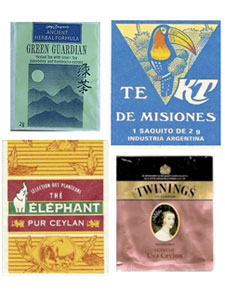
One of the most important factors defining the current popularity of tea, particularly in the West, is undoubtedly the teabag. In retrospect, the (albeit accidental) invention of pouches that can be dunked directly into hot water has strongly impacted the spread of the beverage in the industrialized world. It made tea consumption possible in an urban setting and created a format fit for existing retail environments. It must be said that convenience came at the expense of quality, with mediocre tea grades becoming standard for most of the twentieth century.
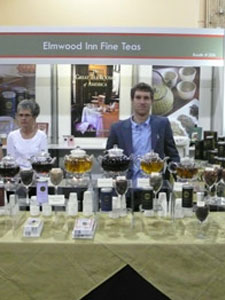
The Tea Expo in Las Vegas confirmed tea’s vibrant evolution, spotlighting visual splendour, transparent packaging, culinary experimentation and sophisticated brewing tools. From green tea liqueurs to sweets and precision kettles, the industry appeared buoyant, innovative and increasingly premium, inviting vendors and tea lovers alike to savour tea in every form.
As Natural Products Expo West opens in Anaheim, healthy, organic and sustainable goods command the spotlight, drawing record crowds. From foods to personal care, the show reflects surging sales and a deeper lifestyle shift: consumers increasingly demand natural products, equitable production and green values. Even recession talk cannot dim prospects.
 teatrends