 teatrends

In the loop: ready-to-drink iced teas
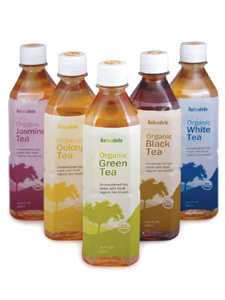
A brief analysis of the US ready-to-drink iced tea market, which has been steadily growing thanks to innovative products and visionary leadership.
June is the official iced tea month in the US, with ice-cold jugs having long replaced steaming cuppas. It offers a fitting opportunity to reflect on latest developments in the industry behind this beverage discovered more than a century ago. Making its way from mothers garden table to sleek supermarket shelves, iced tea has transformed itself from a summer refreshment to a multi-billion dollar industry. Ready-to-drink (RTD) iced tea has also become a promising alternative to other soft drinks of today.
Despite its longevity, the ready-to-drink iced tea market is relatively small and new, buzzing with creative manufacturers and innovative concepts. This is an exciting prospect for the category, because it signifies that the secret (market) formula has not yet been discovered. There are hundreds of brands competing with very diverse product and business ideas, and nothing looks certain as it stands. Granted, there are marques like Lipton, Nestea, Arizona or Snapple that have found a sure footing, but they usually are only extensions of a soft drink conception that has been losing ground for quite a few years now. Indeed, the new face of RTD iced tea is smarter, fresher and greener. It is as much about business practices, sustainability and assessment of market trends, as it is about the drink itself. In many ways it reflects the transformations that have changed the appearance of the broader tea industry.
However, before moving forward, it is essential to establish a distinction between hot and iced tea in order to better grasp the nature of the game. Iced tea is quite different from its hot cousin, not least by its physical attributes. Tea comes in form of leaves that are light, easy to transport and command a higher premium. The leaves necessitate certain tools and time for preparation and enjoyment. In this respect, ready-to-drink iced teas are quite the opposite: they are heavy to transport and supply, have much lower margins (on a per unit or volume basis) and are consumed on the spot or on the go. All of this means that RTDs are much closer to the fast moving consumer goods industry than the gourmet market. This implies a denser distribution network, stiffer competition from all sides (including flavored waters, energy drinks, carbonated soft drinks, sports drinks, etc) and, last but not least, more investment upfront.
Whichever way you look at it, iced tea is more than tea on the rocks, even though growth in this category was as awe-inspiring as the take-off of gourmet tea. According to market research, the US ready-to-drink tea industry was valued at $7 bn in 2007 and is expected to reach $10 bn this year. And the fact that such growth was achieved during a severe global economic downturn should put things into perspective. Furthermore, even though the overall US beverage category declined over 3% in volume in 2009 (having dropped 2.1% the previous year first time on record) as customers continued to shun packaged beverages, the RTD tea market was the only segment to record a sizeable gain of 1.2%.
So the question on everybodys mind is how did such a relatively small industry achieve such stellar growth in these difficult times? One of the main reasons is a major social shift towards increasing health awareness. Modern zeitgeist dictates that it is possible to control and influence your wellbeing (both physical and psychological) by what you eat and drink. From this perspective, tea and its wide array of antioxidants and other beneficial compounds appears as an increasingly appealing fix for a crowd in search of nutritional balance in their lives. The fact that the beverage is brewed naturally, as opposed to artificially enriched with additives (as is usually the case for packaged beverages), adds further clout. And then there are literally thousands of scientific studies that have found their way into the mainstream media, confirming teas health benefits ranging from reducing risk of heart strokes to improving dental health. Unfortunately, continued reluctance on behalf of the FDA and its European counterpart to acknowledge those findings in some way or form remains a headache for this developing category.
There are other features in sync with the état desprit of modern shoppers that iced tea manufacturers have harnessed very successfully. This paradigm includes concepts like organic faming, sustainable business practices and environmental concerns. Iced teas available on the market today score high in those areas. In fact, these factors have become ideal drivers in positioning RTD iced teas as a credible alternative to traditional soft drinks. Most notable steps that the category has taken are to source organic tealeaves, replace sweeteners such as high fructose corn syrup with sugar cane or honey, improve livelihoods of farmers that supply the crops and strive to reduce its environmental impact. As figures show, shoppers appreciate those initiatives and reward such companies with a greater share of throat.
As can be expected, these efforts have not gone unnoticed amongst the big players in the beverage industry. Giants like Coca-Cola and Nestlé, as well as private equity firms, have been snapping up promising start-ups in the RTD iced tea category for some time. For example, Coca-Cola invested $43 m in 2008 to acquire a 40% stake in Honest Tea, whereas Nestlé recently agreed to provide $15 m of funding to Sweet Leaf Tea. Although the numbers look ridiculously small next to the revenue generated by these global conglomerates, they are still a clear indication that the tide is shifting in the beverage sector. The sooner you jump on the bandwagon, the smoother the ride. However, it has to be noted that these partnerships rely on more than just funding and the drinks giants are not just making a wild bet at a roulette table. They know perfectly well that success lies in their vast distribution network, established over decades of acquisitions and aggressive marketing techniques. As long as they remain the gatekeepers to this vital aspect of the supply chain, they have the home-court advantage with any new brand they are willing to take aboard.
Nonetheless, the most exciting aspect of the RTD iced tea sector is precisely the fact that there are so many underdogs competing for their share of limelight. Each brand has a unique interpretation of what constitutes the best iced tea and the jury is still out. This can be compared to the birth of the automobile over a century ago, when engineers were experimenting with diesel, petrol, steam, electrical and even hydrogen engines, all of which were coexisting before the winning formula emerged.
The easiest way to analyze this burgeoning category is to divide it into two subgroups: flavored and unflavored. The former encompasses teas mixed with fruit juices or flavored with other sweeteners, whereas the latter refers to pure naturally brewed iced teas. It is no wonder that flavored versions are more abundant, given the predominance of sweet-toothed customers, yet both subgroups address different consumer needs and have the potential to develop into huge markets.
Flavored iced teas are much closer to soft drinks than naturally brewed tea. In that sense they are more familiar to the taste buds of the average consumer and can be considered as beverages that bridge the gap between the traditional soft drinks and natural tea. In this respect they benefit from a lot of flexibility in terms of ingredients and formulas. For example, the leading brand in this subcategory, Honest Tea, boasts a range flavored with dozens of ingredients like berries, superfruits, exotic fruits and natural sweeteners. Similarly, Steaz iced teas are not only flavored with fruit juices and sugar cane, but are also brewed using sparkling water, making them not-too-distant cousins of carbonated soft drinks. Such features are helpful indeed if you are, say, a Dr. Pepper addict trying to adopt a more balanced lifestyle. And in the US there are millions of such sinners trying to redeem themselves from the excesses of high fructose corn syrup, hence the demand.
However, what about those who are actually into tea? Those who would like to experience the same complexity and richness of taste associated with gourmet tea, only in a bottle? That is where the other subgroup comes into play. Instead of accommodating mass market needs, these niche companies are providing connoisseur consumers with something that resembles a cup freshly brewed. Naturally, the priorities are quite different here. Quality of the tealeaves and complexity of the infusion are the main factors. Obtaining an accurate balance of aroma, taste notes and refreshment that reflects the properties of each tea variety is paramount. A fine example of this approach is the anTEAdote iced tea by Adagio Teas. The range contains five varieties (black, green, jasmine, oolong and white) of gourmet iced teas designed to highlight the features of each tea type. Tea aficionados can opt for the subtle and delicate flavor of white tea or choose a more complex and floral bouche of oolong tea.
There are opportunities for both subgroups to continue their expansion, as interest for healthy beverages and gourmet tea is still rather nascent across the western world. Nonetheless, the success of the multitude of players in the RTD iced tea arena cannot be attributed to market trends alone. A lot has to do with people behind the brands who infuse them with energy and visionary leadership. Most, if not all, of the companies started by brewing their first batches in basements and sheds across the country, which gives them a unique edge in understanding the amount of effort and experience needed to make things work. It is this empirical approach and the energy and innovation that stem from it that is the main asset against established marques. The spirit behind healthier beverages goes beyond product development and transpires into everything that these companies do: from the way they treat their customers and employees to new business practices that are changing the way companies are run.
It is difficult to predict which concepts will survive and which will have to suffer the consequences of natural selection. There are quite a few challenges that lie ahead for the category, not least the morose economic situation and continued pressure from traditional soft drink industry. In the meantime, those who are able and willing to adapt, react and innovate accordingly will have an edge.
Stepas Parulis is TeaTrend's editor and oversees Adagio's operations in Europe. He analyzes the tea industry through the prism of market and consumer trends.