 teatrends
State of the UK Tea Industry - Jane Pettigrew
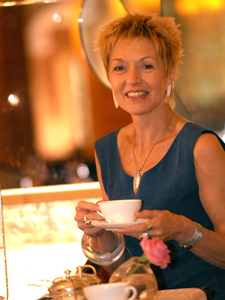
A conversation about Specialty Tea market in the UK, its similarities to the wine industry and the modern conception of tea business with Jane Pettigrew, writer and consultant based in London, UK.
Specialty tea has done extremely well over the last decade, evolving from niche to mass market status. How would you describe the state of the industry in the UK at the moment and what were some of the key drivers in its rise to popularity over the past few years?
Tea in the UK is still very much an everyday brew that many people take for granted and really don't know very much about. They don't realise, for example that most tea bags are filled with a blend of teas from Vietnam, Indonesia, Rwanda, Malawi and other small African countries as well as the better known India and Kenya. In fact, most people have probably never stopped to think about where their tea comes from or how it is blended with such practised skill.
However, if you liken our tea trade to the wine trade in Britain about 30 years ago, it becomes clear that with the right sort of marketing, the right marketing language that makes some sense to the consumer, the placing of tea (or indeed any product) into a more classy and stylish (possibly more expensive) category, and with a more adventurous range of products available in normal high street shops where everybody shops, British consumers will begin to show an interest. The wines on offer in the UK in the 1960s and 70s were limited and of pretty poor quality, but today, everyone knows their grapes, their origins and their preferences. The same thing is now happening with speciality tea - more people now know that there are greens and whites as well as blacks - they may even be aware of oolongs and puerhs. More teashops are to be found in mainstream shopping centres and high streets, more varieties of traditional and more unusual teas are on show on the shelves, marketing material, menus and packaging carry much more inspirational descriptions and tasting notes, staff in hotel lounges, tea rooms and tea retails stores are better trained, brewing methods and presentation have improved and prices per pot or per kilo have gone up - thus placing the product into a connoisseur category and making tea more than just a brown coloured liquid. It is no longer considered 'naff' to drink tea after dinner, it is chic and stylish and such a good choice! Even the Financial Times now includes long articles in praise of speciality teas from China, Taiwan, India and other far off exotic places.
Other reasons for the new upward trend are all the health messages that appear in daily newspapers and glossy magazines almost every day of the year. Tea is now seen as a healthful beverage, an excellent alternative to coffee, carbonated drinks and alcohol. Many people now recognise that it's fun, young, cool to meet friends in a tearoom; it's fashionable to take afternoon tea; it's a relatively low-priced treat to buy good quality loose leaf tea to brew at home; and beautifully packaged tea makes a great gift. And after all we now grow our own, very expensive, very exclusive tea in Cornwall. That has really made people sit up and take notice.
The Specialty Tea category in Great Britain is relatively new. What are the reasons behind this delay in a country historically associated with tea culture?
I think firstly, that the British have never been particularly adventurous about or even interested in their food and drink. We have a very pragmatic approach I think and have no historical culture as in France or Italy where food and drink is seen much more as one of the essential pleasures of life on which a great deal of time and thought is spent.
Added to that is the fact that, since the introduction of the teabag, most people's understanding of what tea is and where it comes from has been lost. So, if you talk to people now in their 60s, 70s and 80s, they tend to have a much better knowledge about different types of tea and will choose a tea by its origin rather than just accepting tea (although that does depend on background and 'class' etc). They probably know that teas are different and why, and may well have visited tea gardens or some may even have grown up on a tea plantation. People of a younger generation, on the other hand, will be used to simply drinking 'tea' usually made with a tea bag, but will not have a clue about where the tea inside has been grown or that the tea inside the tea bag is a blend.
Because tea is so much a part of our culture, people tend not to stop and ask where it comes from, what it is etc. It's a little like any other everyday commodity - it's something you need, something you take for granted and so, when you pick up a packet from the supermarket shelf, you may choose a particular brand or be aware of the price but that's about all most people think about while shopping. Even buyers in the big supermarkets don't have a clue what they are putting out onto the shelves - to them it's just 'tea' - imagine them doing the same with wine today!
Quality tea usually comes at a price. With the UK experiencing one of the most severe recessions in modern history, how will this newfound appeal for luxury produce likely be affected?
I don't think we can know this yet. If enough people have already started choosing speciality teas from speciality suppliers and are hooked on the quality and the taste, then they will perhaps stay with their choice. Others will inevitably cut back and perhaps return to cheaper types of tea that they can pick up for less in the supermarket.
You are a leading authority on tea and consult many businesses in the UK and abroad on various aspects of this unique beverage. Have you already noticed a shift in the way clients feel about the tea business given current market conditions and what are some of the concerns that are being raised?
No. I think obviously people are aware of what is happening and will be concerned as to how it will affect them but so far, most tea businesses seem to be doing well. Apart, that is, from Whittard who has recently announced to be going into receivership. I'm not sure that that is anything to do with the recession though.
Where is the tea industry likely to be heading in the foreseeable future, and what consumer / product trends may we expect to move the category forward in these troubled times?
So far, despite the economic downturn, established tea rooms and tea bars do not seem to be suffering. The general feeling seems to be that quality tea is a relatively low-priced treat and, as people need treats during a recession, those peaceful, recuperative, calming moments with friends or alone over a pot of tea will continue to be part of people's lives. The individual success or otherwise of any business will obviously depend on how well it matches expectations of customers. But as with wine, once a tea drinker has refined his or her palate to the appreciation of top quality, fine world teas, they will not easily turn back to cheap tea bags that perhaps they drank previously.
I think we will see more and more of the bright, young style of the more modern tea shops where friendliness, service, great offerings, and a really special atmosphere brings customers back and back. In some cases that will be funky, buzzy, connected to the lively atmosphere of city life; in others it will be a more traditional, calmer, quieter but still stylish and contemporary. I think we will see more innovative brewing methods and more thoughtful presentation, lots of glass and more quirky designs, less of the old fashioned Victoriana. People want to feel they are moving forward not back. More people now recognise that tea does have valuable connections to our past but also to our future and they do not care for the stuffy, over-flowery, backward-looking approach to tea. Now they want a freshness, a lightness of touch and a creative spirit. I also think tea drinkers will continue to show an interest in more unusual origins - perhaps Korea, Taiwan, hand made teas from Africa, etc. They will be captivated and hooked by the stories that connect them to the people who make the teas they like to drink.
After 12 years as a language and communications trainer, Jane opened the well-known tea-shop, Tea-Time, in Clapham, south west London with two friends. As the shop became a thriving success, Jane also started writing and lecturing about tea and eventually sold the shop to become a freelance editor, writer and consultant to a number of tea companies and organisations including Tea International, journal to the Tea Trade, the UK Tea Council, The UK Tea Club, Tea and Coffee Trade Journal, Tea and Coffee Asia, and the Indian Tea Board. She has also trained staff and given presentations in a number of five start hotels and top tea rooms around the world and now gives tea masterclasses in London under the auspices of The UK Tea Council.
She has written 13 books on tea, 18 other books on food and food history, and articles and essays on various tea-related subjects have appeared in newspapers and magazines both in the UK and overseas. She appears regularly on television and radio to discuss the various aspects of tea and tea history.